
Brisbane’s Top Growth Corridors: Where Our PhD Economist Says to Invest in 2026
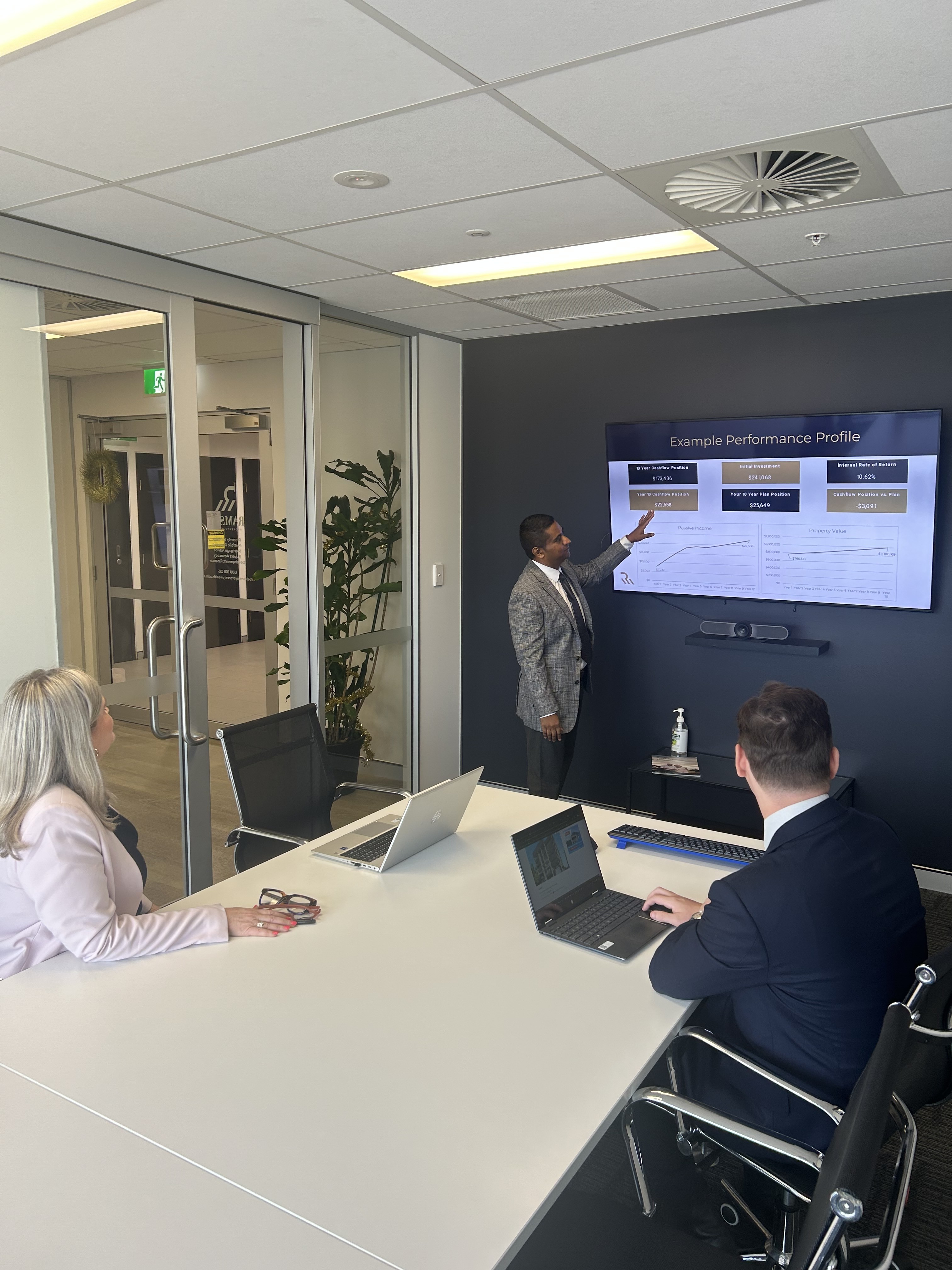
Every quarter, our Property Economics team analyses Brisbane’s investment landscape using original research - not aggregated data
feeds, not CoreLogic screenshots, not commentary recycled from last year’s reports. We model vacancy rates, rental demand
trajectories, infrastructure pipeline impacts, population growth patterns, and yield stability at suburb level.
This article shares the framework we use to identify growth corridors for our clients - and highlights the macro patterns shaping where
institutional-grade capital is flowing in 2026.
How we define a growth corridor
A growth corridor isn’t simply a suburb with rising prices. That’s a lagging indicator. Our definition requires the convergence of five factors:
First, vacancy rates below 1.5% with a tightening trend - this confirms rental demand is structural, not seasonal. Second, confirmed infrastructure investment within a 5km radius that creates a permanent amenity uplift, not a temporary construction premium. Third, median price positioning that still offers yield compression potential relative to comparable corridors. Fourth, population growth driven by employment migration rather than speculative buyer activity. Fifth, planning framework that supports density or dwelling diversity - this is where dual income, duplex, and secondary dwelling strategies unlock above-market yield.
When all five converge, you have a corridor where both capital growth and yield are defensible over a 5 - 10 year horizon.
The macro picture: why Brisbane continues to outperform
Brisbane’s outperformance relative to Sydney and Melbourne is not a temporary dislocation. It reflects a structural repricing driven by several measurable forces: the affordability gap (Brisbane medians remain $800,000–$1,000,000 below Sydney equivalents), continued interstate migration (Queensland recorded the highest net internal migration of any state in 2024–25), and infrastructure investment at a scale not seen since the pre-2032 Olympics pipeline was announced.
For interstate investors, this creates a window: the entry point is still accessible, but the growth trajectory is underwritten by
fundamentals that compound over time. The question is not whether Brisbane will continue to grow - it’s which corridors will capture
disproportionate growth based on the five factors above.
Western growth corridor: Oxley – Darra
The Oxley - Darra corridor represents one of Brisbane’s most compelling value-driven growth plays in 2026. Median prices across the corridor currently sit between approximately $940,000 and $1,050,000, positioning it below many inner-ring comparables while still benefiting from proximity to major employment nodes and transport infrastructure. Vacancy rates are averaging around 1.0%, indicating persistently tight rental conditions and strong tenant demand.
Gross rental yields range from roughly 2.4% to 4.3%, with upside driven by new housing stock entering the market. Population growth of approximately 2.4 - 2.5% annually is being underpinned by affordability-driven migration, particularly from higher-priced inner-west suburbs. Infrastructure catalysts include ongoing transport connectivity improvements and access to established industrial and logistics employment hubs.
From a planning perspective, zoning supports new build outcomes and gradual densification, making this corridor particularly well-suited to
house-and-land or turnkey new build strategies. For investors, the opportunity lies in securing modern stock that will benefit from both
rental demand and future yield compression as the corridor matures.
Eastern growth corridor: Carina – Capalaba
The Carina - Capalaba corridor reflects a more mature, family-driven growth pocket with strong owner-occupier appeal. Median prices range from approximately $1.01 million to $1.37 million, reflecting its relative proximity to the CBD and established lifestyle infrastructure. Vacancy rates are exceptionally tight at around 0.5%, one of the lowest across Brisbane, signalling deep and persistent rental undersupply.
Rental yields are currently sitting between 2.8% and 3.4%, with steady performance supported by consistent tenant demand. Population growth of approximately 2.0 - 2.1% is driven primarily by long-term household formation rather than transient renters, which contributes to price stability and reduced volatility.
Infrastructure drivers include retail, education, and transport upgrades across Brisbane’s eastern corridor, reinforcing its liveability profile. Planning frameworks allow for incremental density and redevelopment, although at a more controlled pace than emerging outer corridors.
The recommended strategy here is strategic new build or high-quality infill development, targeting family demographics. While yields are slightly tighter, the trade-off is stronger long-term capital growth underpinned by owner-occupier demand and limited supply elasticity.
Southern growth corridor: Upper Mount Gravatt
Upper Mount Gravatt stands out as a high-intensity, yield-optimised corridor with strong alignment to employment and education hubs. With a median price around $1.33 million and vacancy rates near 0.8%, the suburb exhibits both demand resilience and limited rental availability.
What differentiates this corridor is its elevated population growth rate of approximately 2.8%, one of the strongest in the dataset, driven by migration linked to nearby universities, hospitals, and commercial precincts. Rental yields currently sit around 2.4%, but the real opportunity lies in yield enhancement through alternative dwelling configurations.
The area benefits from significant infrastructure and amenity concentration, including major retail centres, transport corridors, and institutional anchors. Planning frameworks are supportive of higher-density living and diversified housing typologies.
As a result, the recommended acquisition strategy is co-living or multi-income configurations, which align with the demographic profile and
maximise rental return per dwelling. This corridor is less about entry-level affordability and more about optimising income through
intelligent asset design.
Why this matters for interstate investors
If you’re investing from Sydney or Melbourne, this level of suburb intelligence simply isn’t accessible through a portal search.
Domain and realestate.com.au show you what’s available - but they don’t explain why a suburb’s vacancy rate is tightening, whether infrastructure investment is confirmed or merely proposed, or how the local planning framework enables the yield strategy you’re considering.
That’s the gap our Property Intelligence Package is designed to fill.
Every Premier Select client receives original research across 10 Queensland locations, produced in-house by our economics team and delivered
through a dedicated 30-minute Property Insights Session. It’s a level of analysis no other buyer’s agent in Australia can offer
- because no other firm operates with an in-house PhD economist generating original, forward-looking research.