
Brisbane Property Window Is Closing Faster Than You Think
Brisbane has just been ranked the best city in the world to raise a family. Simultaneously, Sydney's auction clearance rate collapsed to 43.59%. The two-market divergence has never been more pronounced, and the window to act at current price points is measurably closing.
In this article
- Brisbane ranked #1 city in the world
- Southern markets: the alarm signals
- The infrastructure that hasn't been priced in yet
- Why most investors still aren't acting
- Frequently Asked Questions
Most investors watch the market. The smart ones watch what the market hasn't priced in yet.
If you've been on the fence about property investment, or you registered your interest with us a while back and life got in the way, this post is for you. Because right now, something significant is happening in South East Queensland, and the data suggests the window to act at current price points is measurably closing.
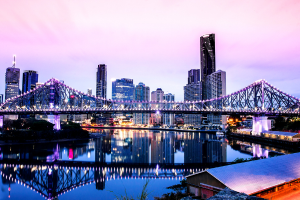
Brisbane Has Just Been Named the Best City in the World
 Not
the best city in Australia. The best city on earth.
Not
the best city in Australia. The best city on earth.
A major international index comparing 50 global cities, including London, Helsinki, Auckland, Sydney and Melbourne, has ranked Brisbane number one in the world to live in. The Queensland capital beat London into second place, left Sydney in fifth and Melbourne limping in at seventh. The metrics behind the ranking weren't fluffy: affordability, safety, green space per capita, family liveability, cost of living, and infrastructure investment all factored in.
Here's the number that stands out most for property investors: families in Brisbane spend roughly $1,350 less per month than families in Sydney, that's over $16,000 a year back in their pockets. And Brisbane has more parks and green spaces per capita than any of the other 50 cities surveyed globally.
When a city earns that kind of recognition, demand for property follows. And in Brisbane's case, that demand is structural, driven by record interstate migration, a $31.2 billion committed infrastructure pipeline, and seven years of Olympic economic stimulus still ahead.
Meanwhile, the Southern Markets Are Sending Alarm Signals
The data coming out of Sydney and Melbourne right now is stark. Prominent industry figures are describing current conditions as a 'perfect storm of uncertainty', with nationally scheduled auctions clearing at just 57.9% last weekend, the lowest clearance rate recorded all year. In Sydney specifically, the clearance rate dropped to just 43.59%. Melbourne was barely ahead at 41.52%.
Leading auctioneers are reporting that getting the first bid is getting harder, bidder registration numbers are down, and properties are taking longer to sell. One prominent auctioneer described the shift as happening 'very, very fast.' Another noted that vendors are now proactively asking whether they need to reduce prices, something he described as simply 'not normal.'
The culprits are well documented: inflation concerns, the prospect of a rate rise, and global uncertainty all converging at once. A major research firm has already released forecasts that Sydney and Melbourne could actually lose value in 2026 based on current stressors. And critically, sales are still strong in Brisbane, Perth and Adelaide.
The arithmetic is clear: Sydney median house prices now exceed $1.4 million with gross yields below 2.5%. Melbourne sits at around $950K with similar compression. For investors in those markets, the infrastructure that drove the last decade of growth is largely priced in. SEQ offers the inverse, middle-ring Brisbane entry from $650–800K with yields of 3.8–5.9%, and a $31.2 billion infrastructure story that hasn't been priced in yet.
The Infrastructure Is Funded. The Prices Haven't Caught Up.
This is the core of the SEQ opportunity. The $31.2 billion committed to South East Queensland's transport network, Cross River Rail, Logan to Gold Coast Faster Rail, airport connectivity upgrades, motorway improvements, and more, is not a proposal. It is contracted, funded, and underway.
History is consistent on what happens next. Across every developed-market Olympic host city, Sydney 2000, London 2012, Beijing 2008, property markets either maintained pre-Games growth rates or accelerated after the Games. Infrastructure delivery and elevated international profile create permanent demand-side repricing.
The window to enter at pre-infrastructure-delivery price points is measured in months, not years.
So Why Aren't More People Acting?
Because most investors fall into one of three traps: no clear strategy, too much conflicting advice, or simply not enough time to do the research and make a confident decision.
These aren't signs of poor character. They're signs of complexity without the right support. And they cost real money, in the form of missed compounding growth, delayed financial security, and the very real possibility of entering a market after the optimal entry point has passed.
We've put together The SEQ Opportunity, our most comprehensive market intelligence report, to give you the full picture in one place. It covers the infrastructure pipeline, suburb-level risk modelling, Olympic economic data, and the precise entry points that represent the strongest risk-adjusted opportunity in Australia right now.
The SEQ Opportunity Guide
Institutional-grade research on South East Queensland's property market. Infrastructure analysis, probabilistic suburb modelling, Olympic economic data. Yours free.
DOWNLOAD FREE REPORT
In just 30 minutes, a discovery session can change the direction of everything, book yours today.
BOOK DISCOVERY SESSION